
Managing the Costs of Fleet Management
You've got a fleet of work trucks to manage, but it's draining your time and money. Let's see if we can lighten the load.
If you run a construction business with more than a couple of trucks, you know the reality. Vehicles can be a boon or a burden. If things get out of hand, they can quietly rob your profits. Anytime a truck sits in a shop, it's only costing money and slowing down the work. When a truck breaks down on a jobsite, that's even worse. Unfortunately, we tend to leave things alone until they need attention. This can lead to missed maintenance and expensive repairs. It's important that fleet maintenance is treated like an important business process, rather than an afterthought.
Most companies start small and have to build their way up slowly. As they go from two vans to a dozen trucks, they may choose to handle them the way they once did when they were a small business. At that size, it's important not to just go off memory or sticky notes. A formal, scheduled process needs to be implemented or those vehicles will inevitably fall into disrepair. Here’s what actually helps when you’re trying to keep a working fleet on the road.
Buy (or Lease) for the Work, Not the Image
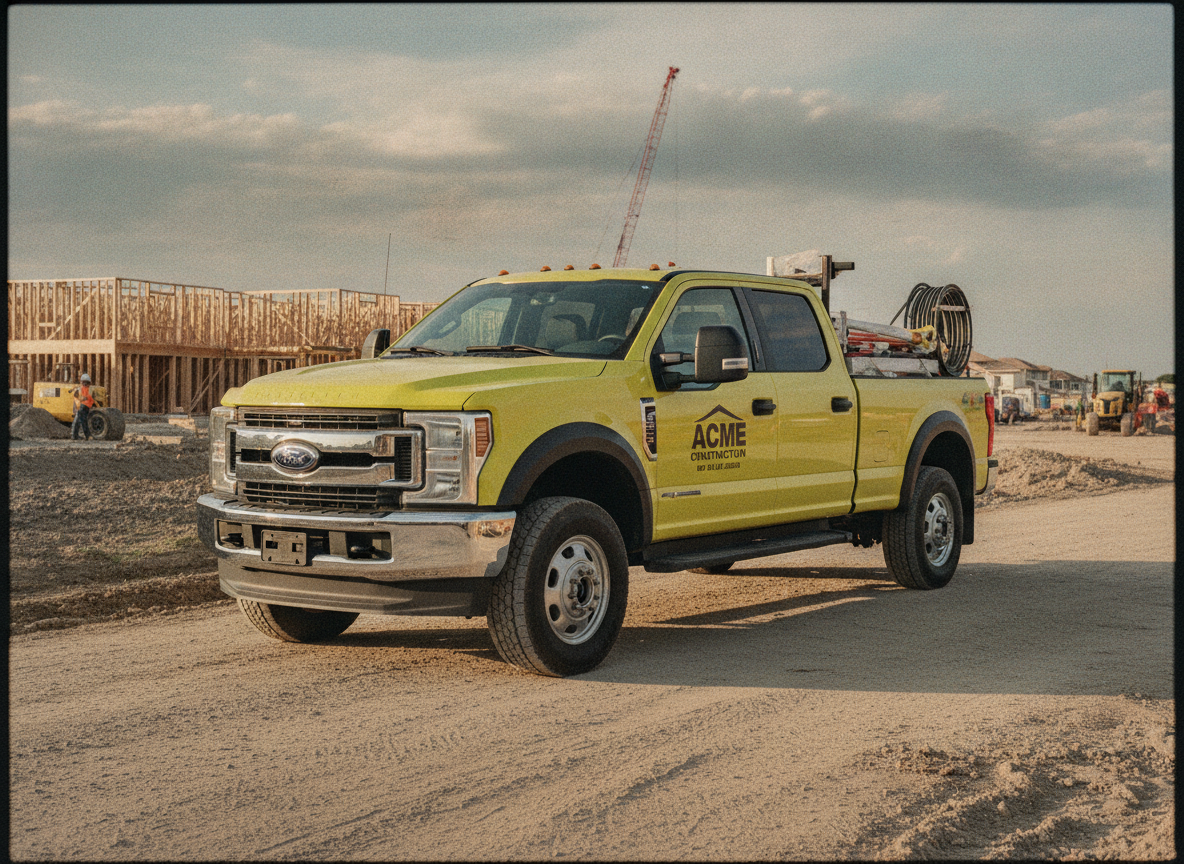
It’s easy to get talked into bigger, nicer trucks than the job requires. A crew that mostly hauls tools and small materials does not need a one-ton dually with every optional upgrade. It's best to be practical, as this is a work truck. Appearance and creature comforts don't need to be top priority. Match the vehicle to its intended daily use. Consider the payload, towing, cargo space, and fuel type. You may even have to buy a brand you swore you'd never own. Brand loyalty is pretty serious with trucks, but if you can get a deal on something you can rely on, you should really consider it.
Don't get me wrong, good heating and AC are critical. The upgraded sound system is not.
Decide early whether you’re better off buying or leasing. Buying builds equity and can be cheaper long-term if you keep the trucks for years and maintain them well. Leasing can make sense when you want newer vehicles with warranty coverage and predictable monthly costs, especially if your work is hard on equipment. Just run the numbers with your actual mileage and repair history instead of the salesman's projections.
Maintenance Costs Less than Catastrophic Failures
Companies that stay up on maintenance usually have a simple system. This means every truck has a schedule, and someone is responsible for making sure the work is done. Oil changes, tire rotations, brake inspections, and filter replacements should not depend on a driver remembering when it's time.
Keep basic service records in one place. A spreadsheet is underrated, but you can also use free apps or a shared folder on Google Drive. When a truck comes in with a problem, those records will be easy to access.
Ignoring small issues is tempting. We don't always have the time to care, but if you put it off too long, the price to repair can increase. Here are two exampoles: A transmission was making awful sounds. After a quick inspection, it just had a leak. But that leak was pretty serious, and the transmission was basically dry. If it had continued operating for weeks, it could have burned up entirely. Instead, a couple hundred bucks and some transmission fluid saved the day. In another instance, tire pressure was low. That was it. Some free air could have solved the problem. Instead, the tires ran low for months and the tread wore aggressively. No amount of tire rotation would do, and the tires had to be replaced at full cost.
With that in mind, it can pay off to note obvious leaks. Car fluids are like the life blood of the vehicle. Not every leak is a tragedy, but it pays to stay topped off when stopping the leak isn't worth the cost. Do an occasional walk around of the vehicle. Check the lights, tires, and fluid levels. A few minutes could save thousands of dollars.
Know Where the Money Is Going
On their own, fuel, repairs, insurance, and depreciation are not going to break the bank. Together, on the other hand, it can be a surprising amount of money. Owners might not realize the total expense if they're not keeping their books. One way to track this is by using cost per mile. That helps you predict future costs. Any basic system of tracking is better than none. After a few months of tracking fuel by vehicle, logging major repairs and downtime, you'll know which trucks are earning their keep and which ones are becoming money pits. Sometimes it's cheaper to offload one.
If you've got a bigger operation, telematics or simple GPS units can help with tracking. You don’t need the fanciest system. Just get something that shows location, mileage, and idle time. That can help you spot waste or misuse, which is another real cost. Just be clear with your crews about why you’re using it.
Drivers Make or Break the Fleet
People tend to take better care of their own things, and a company trucks may prove that point. Set clear expectations early: no personal use without permission, report problems immediately, keep the interior reasonably clean, and treat the vehicle decently.
Some owners assign specific trucks to specific people. This creates a sense of responsibility, because the driver is accountable for that truck. If a driver is familiar with the truck, it will be easier to notice when things are off. If you rotate vehicles regularly, these things can more easily be missed. It doesn't feel like anyone's responsibility.
Also, just as a managerial note, you'll want to decide in advance how you’ll handle tickets, accidents, and damage. Put it in writing to avoid arguments later on.
Car Washes?
It may not be first priority when you're behind on a job and you have supply issues. However, it's not totally useless. Washing a truck that's been caked with dirt from a work site can be a matter of prevention too. That dirt will cause rust, so get the occasional undercarriage spray. Also, that truck is a driving billboard for your company, so a little bit of shine won't hurt.
Insurance, Compliance, and the Stuff That Sneaks Up on You
Make sure your coverage actually matches how the trucks are used. If you just have a basic transport vehicle, that may be insured differently than the trucks that work near heavy equipment, concrete pipes, and steel beams. Auto insurance policies have rules about radius, cargo, and who's allowed to drive. If there's an incident with an unlisted driver, you can end up in a bad spot. Check your policy and be sure you know what they expect. That fine print can get you if you're not careful.
You'll want to keep registrations, inspections, and any required DOT paperwork current. It doesn't seem to matter until it's urgent, like when a job requires documentation. Keeping a folder or digital file for each vehicle saves a lot of scrambling.
Repair or Replace?
There’s a point where pouring money into an older truck is not going to help much. A basic rule some owners use: if the annual repair costs are climbing past a certain percentage of the truck’s value, or if downtime is getting out of hand, it’s probably time to look at replacement. Reliability is king. A cheap truck that leaves a crew stranded twice a month is not actually cheap after a few months.
When you do need to get a replacement, try to standardize where it makes sense. Same brand or similar models can simplify parts, maintenance knowledge, and even driver familiarity. This is especially true for large companies who keep a mechanic on hand. One process for each truck can save time.
Keep It Simple Enough to Stick
The best fleet systems are the ones people actually use. Fancy software that nobody updates will not be worth the cost. If you've got a basic spreadsheet that works for you, then by all means keep going. Start with the basics: scheduled maintenance, cost tracking, clear driver rules, and issue reporting.
Your trucks are tools that require upkeep. If you give them a little attention from time to time, they'll pull their weight. The companies that do this consistently spend less time dealing with emergencies and more time getting work done.