
Calculating Overhead and Hourly Rate
Business owners know what they pay their employees per hour, but not all of them can put a figure on the company's overhead. That's the true cost of getting a person on the job, and the gap between the wage and the real cost is where a lot of companies lose money. If you’re pricing work based strictly on the paycheck total, you’re almost certainly undercharging. When you work overhead into the quote, you protect your business and get a more realistic compensation for the job.
Let's look at labor burden. You start with hourly wage, but then you need to add payroll taxes, workers' comp, liability insurance, health benefits (if you offer them), paid time off, and any retirement contributions. Those additional costs are all real expenses for the company, and your profit needs to help cover them. For many businesses, the burden adds 25–40% on top of the base wage. A tech making $35 an hour on paper might actually cost $45–50/hr once everything is included. That number is your loaded labor rate, but that's not everything yet. We still need to consider company overhead.
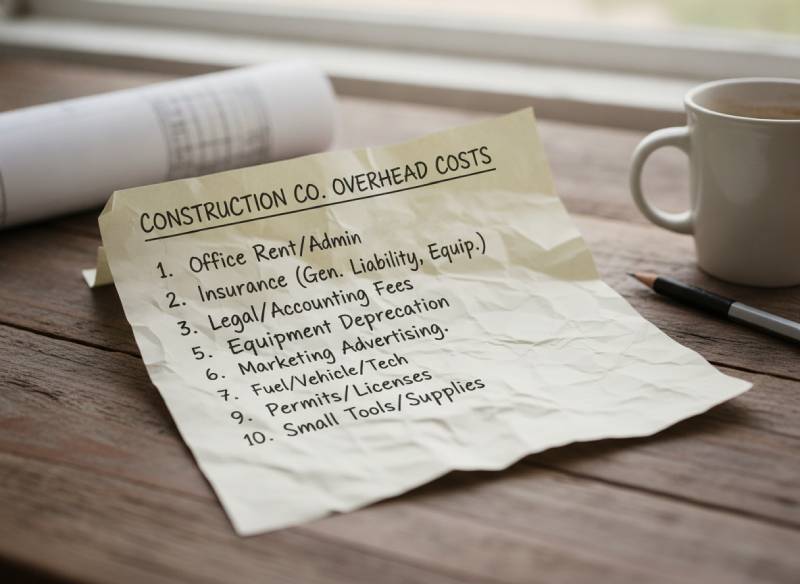
Overhead is easy to underestimate. It's a pretty big list:
- the shop or office
- utilities
- phones
- software
- accounting
- marketing
- insurance
- vehicle costs
- tools and equipment that wear out
- licensing
- continuing education
- uniforms / PPE
Add those expenses up for the year. Now add up the total billable hours you expect for a year. Finally, divide those overhead costs by the total expected billable hours, and that's your overhead cost per billable hour. That means for every hour on the job, that number is part of the overall cost.
If you've just started a new company and this feels overwhelming, don't give up. This may be a lot to manage right now, but these are the steps that can help keep you in business for the long-term. If you're able to get an accountant, they can be invaluable for keeping the business afloat. They allow you to keep focused on what you do best.
Billable hours are another place where miscalculation can hurt. A tech who works 40 hours a week does not bill 40 hours only. You've also got drive time, material runs, callbacks, training, meetings, and weather delays. These eat into production time. Many service companies land between 55% and 70% billable. If you assume 80% or higher without tracking it, your hourly cost calculation will be too low and every job will be tighter than it should.
Here’s a simplified way to put the pieces together. Take the loaded labor rate (wage + burden). Add the overhead cost per billable hour. That sum is your break-even rate. It's just enough to cover your costs. Now you can add in the profit margin you want. A healthy target for many electrical service and light commercial companies is 15–25% net, depending on the market and risk level. The final number is the hourly rate you should be using when you build prices or quote time-and-materials work.
Here's an example: A journeyman’s loaded cost is $48 per hour. Your annual overhead is $180,000 and you expect 4,000 billable hours across the company. Overhead per billable hour is $45. Break-even is $93. Add 20% profit and you’re looking at roughly $112–115 per hour as a target recovery rate. If you’re currently charging $85–95, you're not going to see your financial dreams come true. You may see some financial nightmares though.
To use electrical work as an example, there are a few cost drivers worth watching. Specialty tools and test equipment add up and need replacement. Vehicles carry ladder racks, parts inventory, and higher insurance. Licensing, continuing education, and code books are ongoing expenses. Service trucks that sit in traffic or drive long distances between calls increase the non-billable percentage. If you do a mix of service and project work, track the utilization separately. Project work often bills a higher percentage of the day than pure service calls.
Here are some common mistakes:
- Using the employee’s wage instead of the loaded rate.
- Forgetting the owner’s time when the owner still runs calls or estimates.
- Assuming every hour on the clock is billable.
- Ignoring vehicle and tool replacement in overhead.
- Building prices once, then never revisiting them when insurance, fuel, or wages go up.
If you run flat-rate pricing, the hourly recovery rate becomes the foundation for the price book. If you still do some time-and-materials work, you can quote from the fully loaded rate instead of your break-even cost. Review the calculation at least once a year, or whenever a major cost (insurance, rent, fleet, wages) changes.
Knowing the real overhead and hourly rate doesn’t make the work easier, but it makes it more profitable. The contractors who stay profitable over the long run usually aren’t the ones who win every bid. They’re the ones who know what it costs to open the doors, put a qualified person on the job, and still have something left at the end of the month. Get the number right, then price the work accordingly.