
Working with PEX vs. Copper in Older Homes
Older homes force decisions that new construction never has to deal with. You’re rarely starting with open walls and a clean sheet. Instead you’re working around existing galvanized, old copper, limited access, finished surfaces, and homeowners who have strong opinions about what should go back in. Choosing between PEX and copper in that environment isn’t about which material is “better” in general. It’s all about the circumstances of the home.
Copper still has clear places where it makes sense. If you’re only replacing a short section and the rest of the system is copper in decent condition, staying with copper keeps the material consistent and reduces the number of transition fittings. Those transitions are where a lot of future leaks start, especially if the fitting isn’t installed perfectly or the dissimilar metals aren’t handled right. Copper also holds up well in high temperature situations. It doesn’t have the same derating concerns that some PEX systems face near water heaters or in hot attics. Plenty of homeowners still prefer the solid feel and familiar look of copper, especially when the piping is exposed in a basement or utility room.
The labor reality matters too. In open framing, copper can be installed cleanly and looks professional when it’s done right. But in a finished home things rigid pipe can really slow things down. You need to put lines through finished walls, drill through multiple plates, or maybe even work in a cramped crawlspace. Measuring, cutting, cleaning, fluxing, and soldering overhead or in tight quarters adds time and increases the chance of a dry joint or a burn mark on something that wasn’t meant to get hot.
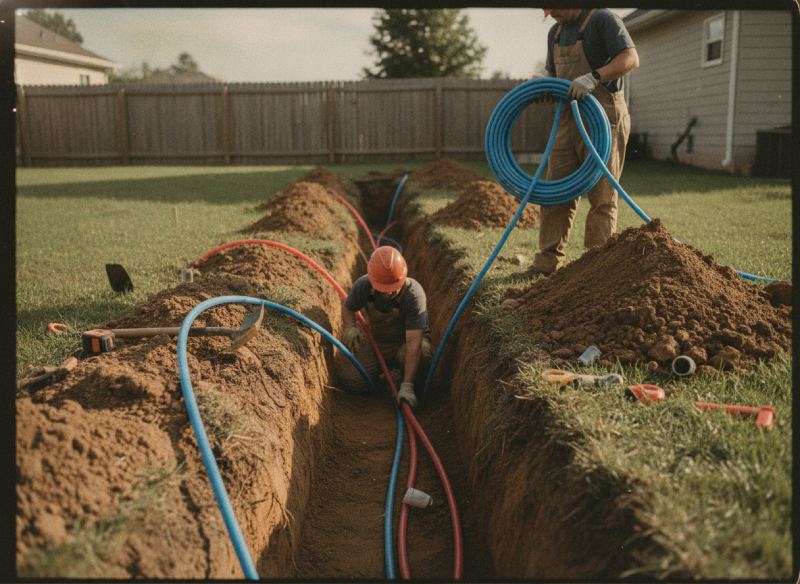
PEX changes the math on a lot of remodel and repair work. The flexibility lets you route around obstacles that would require multiple fittings with copper. You can pull longer continuous runs, reduce the number of joints, and work faster in finished spaces. In houses with old galvanized pipe, switching sections to PEX often makes more sense than trying to keep tying into corroded threads and thin-walled steel. PEX also performs better in mildly aggressive water conditions that can shorten copper’s lifespan. When the walls are already open for a remodel, it’s usually the faster and more economical choice for distribution lines.
Where PEX gets people in trouble is at the details. Transition fittings have to be solid. Going from galvanized or old copper to PEX needs the right adapters and proper support so the joint isn’t under constant stress. Cheap push-to-connect fittings used in the wrong locations, or overused throughout a system, can become the weak points years later. PEX also needs to be supported correctly. It expands and contracts more than copper, and if it’s left loose, it can move, rub, or create noise. Near water heaters, you still need the proper heat-resistant connectors. Ignoring manufacturer requirements will not pay off here.
Older homes often have a mix of materials already, which means you’re rarely choosing one material for the entire house. A practical approach is to use copper where it’s exposed, where temperatures are higher, or where the homeowner wants metal, and use PEX for the long distribution runs hidden in walls and ceilings. Hybrid systems work fine when the transitions are done correctly and everything is supported. Trying to force one material into every situation usually costs more time and creates more joints than necessary.
Access drives a lot of the decision. In a slab house with a leak under the floor, cutting and patching for copper is a much bigger disruption than running PEX through attics or walls where possible. In a house with a full basement and open joists, either material can work. The choice often comes down to speed, cost, and system is already in place. If the existing copper is still in good shape and only one branch is bad, repairing with copper can be a cleaner long-term move. If the galvanized is failing in multiple places, starting the conversion to PEX on those runs is usually the smarter path.
Code and inspection issues are worth keeping in mind. Some jurisdictions have specific requirements for PEX installation, support spacing, and protection from physical damage. Others still favor copper in certain applications. Knowing what the local inspector expects saves rework. The same goes for grounding. When you remove sections of metal pipe, you can interrupt the electrical grounding path. Bonding and grounding need to be addressed so the house isn’t left with a partial or missing path.
Homeowner expectations sometimes cause some conflict. When some people hear "plastic," they want to push back, because it sounds cheap and easy to break. PEX may be the best fit for the job, but you may have a hard sell on your hands. Others want the cheapest option and don’t care what it looks like. Consider the mindset of the homeowner. They were not looking to make a big repair, but a problem came up. Any expense at this point is more than they were prepared to pay, so the lower quote could sound quite appealing if it means making the problem go away sooner. Walk clients through the trade-offs in plain language. And it really helps to let them know what you would usually do in those situations. They're relying on your experience to help them get the best outcome. Explain where each material performs better, what the labor difference means for the final price, and how the work will be handled. Customers will appreciate any information that helps them feel confident in their choice. In matters of big expenses, that's what people need.
Here are a few field notes to consider:
- Don’t mix systems casually. Plan the transitions and keep them accessible when possible.
- Support PEX properly, and be sure to protect it from sharp edges.
- Keep copper within the required distance of the water heater.
- If the old copper is green, thin, or already leaking at multiple joints, continuing to repair it piece by piece often costs more than converting sections to PEX.
- In hard water areas, both materials can work. Consider the water chemistry and the condition of the existing pipe.
There’s no universal winner. Copper is still the right call in plenty of situations, especially for short repairs, exposed runs, and higher-temperature connections. PEX is often the better tool when you’re dealing with long runs, limited access, or a house full of aging galvanized. The installs that hold up are the ones where the material choice matches the access, the existing system, and the way the house is used.